Quick answer: What is SEO? Search engine optimization is the practice of creating and optimizing relevant, authoritative content so search engines list your pages in search results. It involves technical setup, strategic keyword use, and clear structuring. By meeting user intent, you increase organic traffic over time without paying for ad placements.
Key takeaways
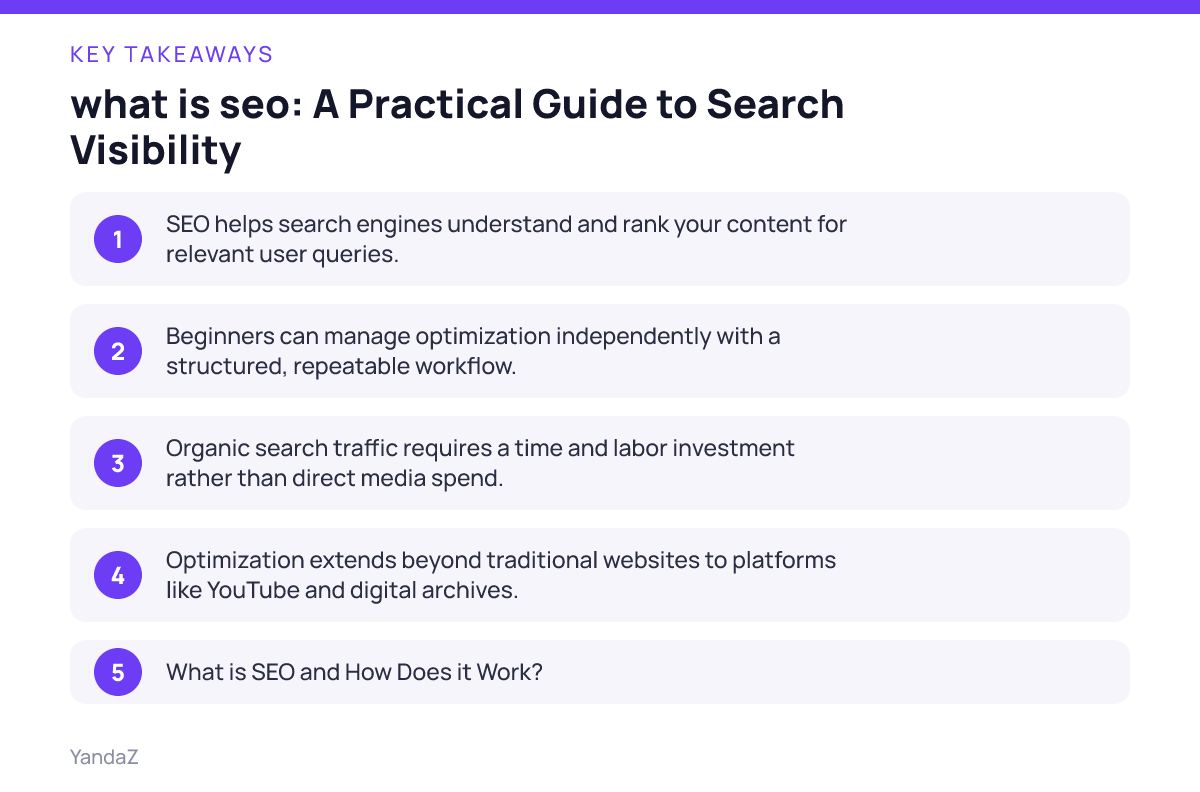
- SEO helps search engines understand and rank your content for relevant user queries.
- Beginners can manage optimization independently with a structured, repeatable workflow.
- Organic search traffic requires a time and labor investment rather than direct media spend.
- Optimization extends beyond traditional websites to platforms like YouTube and digital archives.
What is SEO and How Does it Work?
Imagine running a specialty bookstore in a quiet neighborhood. If you leave the lights off and keep the front door locked, nobody walks in. Search engine optimization acts like turning on the neon sign outside, unlocking the front door.
Placing clear aisle markers so visitors find exactly what they came for.
At its core, what is seo? It is the practice of creating and optimizing relevant, authoritative content in a way that helps visitors and search engine crawlers find answers to their key questions. Every day, millions of users type queries into search bars hoping to solve specific problems.
Search engine crawlers—often called bots—scour the internet constantly. These bots comb through every piece of text, link, and image they encounter. They inspect URLs, title tags, headings.
Internal links to build a comprehensive map of your site. Google and other providers store this parsed information in massive databases called indexes.
When a user types a query into a search bar, the engine scans its index to retrieve the most helpful, accurate pages available. Providers rank pages using distinct algorithms. However, they all reward sites that demonstrate clear structure and genuine value. If you publish thin, copied text, crawlers skip past you. If you provide deep, structured explanations, you give engines a reason to display your link prominently.
Key insight
Search engine optimization succeeds when you prioritize human visitors first, ensuring your text directly answers their intent while making it easy for automated crawlers to parse your structure.
Different search engines prioritize unique characteristics, but you can improve your rankings across any provider by following established guidelines. You don’t need magic tricks. You simply need consistent effort, clean technical execution, and content that genuinely helps your readers.
Image by Pexels on Pixabay
How to Do SEO for Beginners
Starting out can feel overwhelming when dashboard screens overflow with acronyms and charts. You don’t need a computer science degree to start improving your visibility. You simply need a repeatable workflow that addresses what your audience is actively typing into search bars.
- Perform keyword research using free tools to identify terms your target audience uses.
- Draft original content that directly answers reader questions without copying competitor text.
- Structure your pages with clear headings, ensuring your primary search phrase appears naturally in your main title.
- Add descriptive alt text to images so crawlers understand visual assets and context.
- Publish your pages and monitor performance through free analytics dashboards to track impressions and clicks.
For example, if you run a digital repository similar to YandaZ and publish How web archiving worksYou must explain the preservation process clearly so history researchers find your pages instantly. Beginners often make the mistake of stuffing keywords into paragraphs until sentences sound robotic. Write for humans first, and let keywords appear where they naturally fit.
Another common misstep involves ignoring image optimization. When you use high quality images, you give users enough context and detail to decide which image best matches what they were looking for. Writing good alt text helps search engines understand what your image is about and the context of how your image relates to your page.
Can You Do SEO by Yourself?
Many solo operators and small business owners wonder if they must hire an expensive agency to handle search visibility. You can absolutely execute your own optimization strategy if you have patience and time to learn. Managing optimization independently gives you total control over your publishing calendar and messaging.
The solo path requires dedication. You must research keywords, write articles, check technical health, and build links yourself. If you manage a busy retail shop or direct client projects all day, carving out three hours a week for site updates can prove challenging. Still, no agency knows your specific audience better than you do.
💡 Pro tip
Dedicate specific blocks of time each week solely to auditing older pages, updating broken links, and expanding thin paragraphs with fresh insights.
When your site grows beyond a few dozen pages, manual audits become tedious. That’s when introducing specialized software helps automate tracking. If your budget is tight, start with free analytics tools and expand your toolkit only when revenue justifies the software expense. Reviewing past performance reports helps you identify which topics resonate most with your readers.
When business owners examine What digital archiving entailsThey realize that structured information attracts qualified professional leads who are ready to read detailed reports. Doing this work yourself means you understand every technical nuance of your publishing platform.
Is SEO Free or Paid?
People often debate whether search optimization is truly free because it demands substantial time investment. Unlike paid search advertising where you pay every time a user clicks your link, organic rankings cost nothing in direct media spend. You don’t hand money to Google to secure a top organic spot.
However, viewing optimization as entirely free ignores the resource cost of labor. Writing comprehensive articles, fixing technical code errors, and acquiring authoritative mentions take hours of work. If you pay an employee or an external consultant to execute these tasks, capital is actively flowing.
| Feature | Organic SEO | Paid Search (PPC) |
|---|---|---|
| Cost Model | Free clicks (time or labor investment) | Pay per click (immediate ad spend) |
| Time to Results | Slower (weeks to months) | Instant (minutes after approval) |
| Sustainability | Long-lasting traffic streams | Stops immediately when budget ends |
Choosing between the two depends on your timeline. If you need immediate sales tomorrow morning, paid ads work faster. If you want a sustainable asset that generates visitors for years, investing effort into organic optimization yields higher long-term returns.
What is SEO in Digital Marketing and Business?
Within broader digital marketing frameworks, search optimization serves as the foundational layer that supports social media, email campaigns, and paid promotions. Business leaders view search visibility as a channel to capture high-intent demand. Unlike social media feeds where users passively scroll through entertainment, search engines capture active intent. Someone typing a specific query is looking for a solution right now.
Integrating optimization across departments ensures that your content writers, web developers, and marketing managers speak the same language. When developers understand why clean URL structures matter, technical errors drop significantly.
⚠️ Watch out
Don’t rely solely on traffic volume metrics; focus heavily on traffic quality so the visitors arriving on your pages actually convert into subscribers, customers, or engaged readers.
Failing to connect search performance to actual business revenue leaves you guessing about ROI. Tie your organic growth goals directly to newsletter signups, product inquiries, or digital archive memberships.
Image by StockSnap on Pixabay

Expanding SEO Across Platforms: YouTube, Instagram, and Content Writing
Optimization extends far beyond traditional website text. Platforms like YouTube and Instagram rely on internal search algorithms that evaluate descriptions, tags, and user engagement. Understanding Archives and digital libraries means recognizing that video files and image carousels also require descriptive metadata to surface in user feeds.
In professional content writing, optimization dictates how paragraphs flow and how subheadings break up dense topics. Writers must balance creative storytelling with keyword intent. If you pursue a career as an optimization specialist or content writer, mastering this balance makes your work invaluable to enterprise brands and small businesses alike.
| Platform | Primary Ranking Signal | Optimization Action |
|---|---|---|
| Google Search | Relevance, authority, and links | Publish comprehensive, original text |
| YouTube | Watch time and keyword tags | Write detailed video descriptions and chapters |
| Keywords in captions and hashtags | Include searchable terms in profile bios and captions |
Professionals often pursue certifications to validate their expertise. While certificates provide structured learning paths, practical execution on live websites remains the ultimate test of skill.
Additional SEO Resources and Next Steps
Mastering search optimization requires continuous learning because algorithms evolve over time. Bookmark authoritative documentation to stay updated on best practices. Review guides provided by search engine developers and industry experts.
Use the following additional resources to learn more about what search engine optimization is: Search Engine Optimization Starter Guide by Google, Advanced How Search Works, Webmaster Guidelines, Moz Beginner’s Guide to SEO.
Technical SEO manuals provide deep insights into site architecture. Explore keyword research platforms and test your insights on your own publishing platforms today.
Image by theglassdesk on Pixabay

Frequently asked questions
What is SEO and how to work on it?+
Search engine optimization is the practice of refining your digital content so search engines understand its value and display it to users. To work on it, you research what terms your audience uses, draft original and authoritative text that answers their questions, and ensure your site structure is easily scannable by automated crawlers. For example, a historical archive adds descriptive headings and alt text to old documents so researchers find them quickly. The opposite approach, publishing thin, unoptimized pages without regard for user intent—leaves websites buried deep in search results.
How to do SEO for beginners?+
Beginners can start by identifying relevant search terms through free research tools and drafting original content that addresses those specific topics. You should organize your pages with clear headings, add descriptive alt text to images, and track your performance using free analytics dashboards. For instance, a small business owner writes a detailed FAQ page answering common customer questions. When you have an established content library with strong internal links, beginners can shift focus to technical site speed and mobile responsiveness.
Can you do SEO by yourself?+
Yes, you can execute optimization entirely by yourself if you dedicate consistent weekly hours to research, writing, and technical maintenance. Solo operators often manage this successfully because they know their niche audience better than any external consultant. For example, an independent creator running a digital repository updates their own meta tags and audits broken links every month. However, enterprise sites with thousands of dynamic product pages usually require specialized teams and automated software.
Is SEO free or paid?+
Organic search optimization does not require direct media spend paid to search engines, meaning clicks from organic results are technically free. However, it demands a significant investment of time, labor, or payroll if you hire writers and developers. For instance, writing comprehensive articles yourself costs zero cash but requires hours of your schedule. When companies need immediate sales tomorrow morning, paid search advertising becomes necessary because organic rankings take months to build.
What is SEO in digital marketing?+
In digital marketing, search optimization acts as the foundational channel that captures high-intent consumer demand and supports broader promotional campaigns. It drives sustainable organic traffic that converts into subscribers or buyers over time. For example, a digital marketing team integrates blog articles with email newsletters to nurture leads. When brands operate in saturated markets with massive ad budgets, digital marketing strategies often blend aggressive paid search with long-term organic publishing.
What is SEO in business?+
In business operations, optimization functions as a customer acquisition channel that reduces reliance on paid advertising and builds long-term brand authority. It connects commercial offerings directly with buyers actively searching for solutions. For example, a B2B software company publishes technical guides to attract enterprise clients searching for specific workflow tools. When a business operates entirely through offline word-of-mouth in a local niche, search visibility plays a much smaller role.
What is SEO in content writing?+
In content writing, optimization involves shaping sentences, headings, and keyword placement so human readers and search crawlers both comprehend the material easily. Writers balance engaging storytelling with clear informational intent. For example, a lifestyle writer weaves specific location terms naturally into a travel review. When writing purely artistic fiction or poetry, strict optimization rules do not apply because readers aren’t searching for transactional answers.
What is SEO certification?+
An optimization certification is a formal credential earned by completing structured courses that validate a marketer’s knowledge of search engine mechanics and best practices. These programs teach keyword strategy, technical auditing, and analytics tracking. For example, a digital marketer adds an industry-recognized certificate to their resume to prove foundational competence. When hiring senior marketing directors, practical portfolio results and proven revenue growth matter far more than certificates.